Figure 25. Guoy-Chapman "diffuse-layer" model. The random motion of ions results in a diffuse layer of charge in which the concentration of counter ions is greatest next to the electrode surface and decreases progressively until a homogeneous distribution of ions is present in the bulk solution.
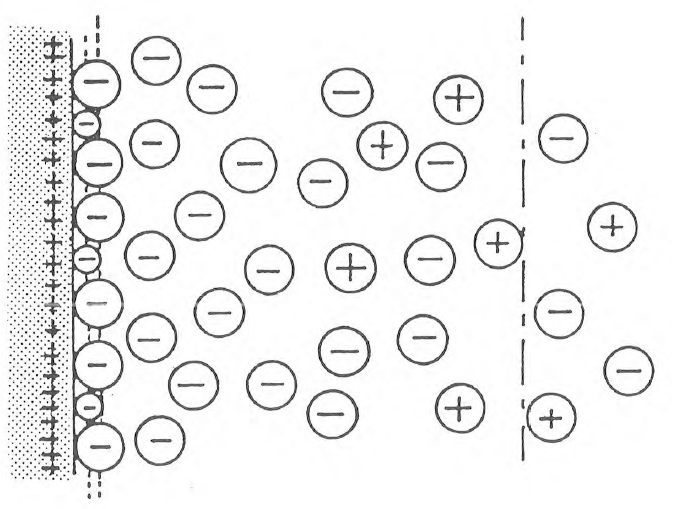
Figure 25 - Guoy-Chapman "diffuse-layer" model. The random motion of ions results in a diffuse layer of charge in which the concentration of counter ions is greatest next to the electrode surface and decreases progressively until a homogeneous distribution of ions is present in the bulk solution.